
Mystique on the Cheap: Making an SFX Look With Beginner Tools
I chose to create a hand makeup look inspired by the character Mystique from X-Men. I started with basic image research of the character and narrowed my design down to the Rebecca Romjin version of the character from the 2000 film.
The Research and Preparation


From there, I started researching techniques for applying prosthetic scales. I found a great video created by the SFX and makeup designers for X-Men and realized no student at our level as access to the materials used to create this look, but it was interesting to see how each prosthetic was fabricated. From this video, I found images of the exact prosthetics used on the hands, which was my visual reference for the new inspired look created from the materials I have.

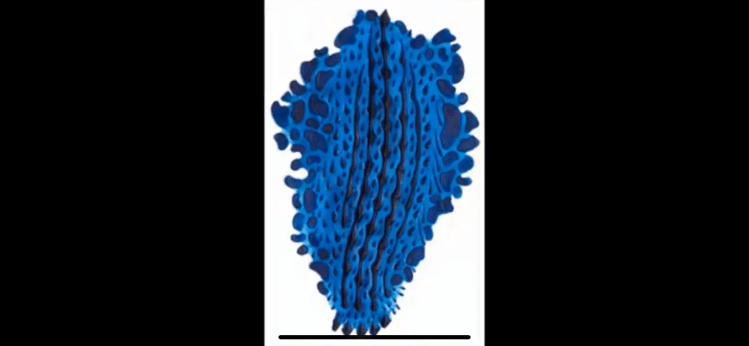

I took the time to play with my materials a bit and experiment with different scale textures in preparation for my first application attempt.

At this point, I made a plan for the application: to first coat my hand in Elmer’s glue as a protective barrier from the latex, then cover my hand in a modest/believable base of scar wax, and build up/carve out/sculpt the pattern from there. I wanted it to be flexible but still hold into place, so I planned to coat it with liquid latex, then let it dry before painting the prosthetic.
The Application
I have fairly sensitive skin, so before I started, I moisturized my hand with plain Eucerin Advanced Repair Cream. As I let that soak in, I gathered my supplies. The idea was to use primarily what I had from my basic student Ben Nye kit. Our intro to makeup class also had us purchase the Mehron Bruise Wheel, and I also included a cream makeup palette for the color. The only thing I purchased for this application was a set of blue press on nails to complete the look.
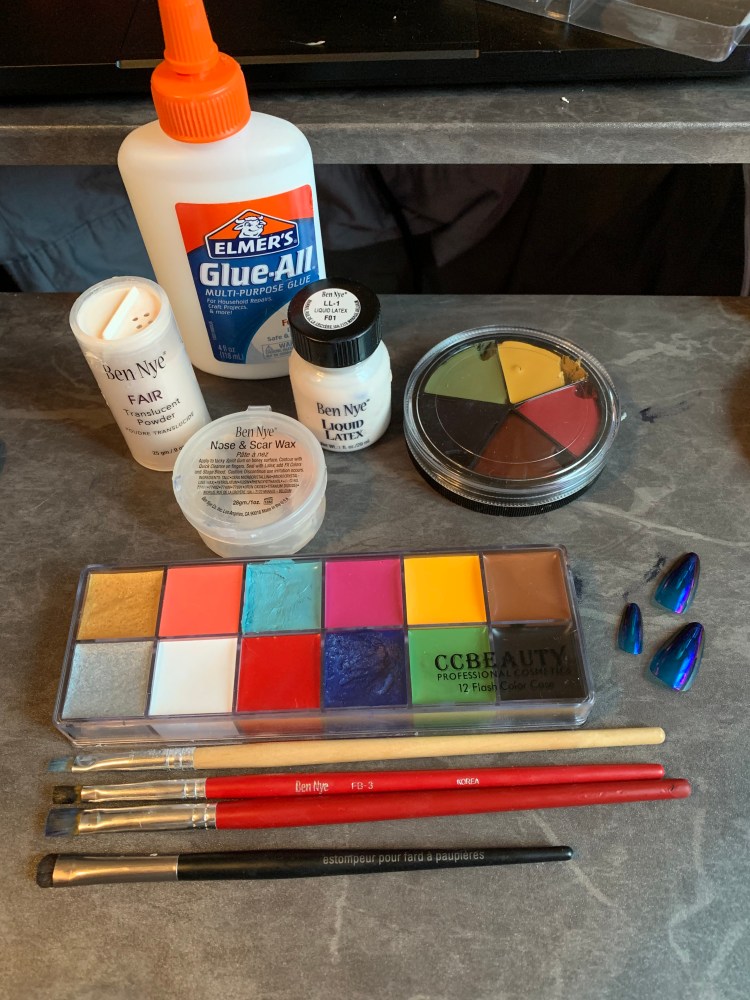
The next thing I did was take a liberal amount of Elmer’s Glue as a first coat, to protect my skin from coming into contact with much liquid latex. I was told in a previous makeup class that Elmer’s Glue can sometimes be used to replace liquid latex. I also know there are various products out there to protect the skin from prosthetic makeups, but I wanted to make my application as inexpensive and accessible as possible. This method worked fairly well, but I did struggle a bit by the time I got to applying the scar wax. It would pull up the glue layer as I was trying to spread the wax across my hand. To prevent this next time I use scar wax, I am going to pick up some petroleum jelly. I have seen it used to keep the wax from sticking to your spatula and fingers.

I wanted to create height on the tendons as the primary prosthetic. I made a huge mess, and I probably should have shaved my hand and wrist. After I molded the wax into a shape I liked, I powdered it and set it with about two coats of liquid latex, then powdered it again. When that was done, I put away the liquid latex and wax to get ready to paint.
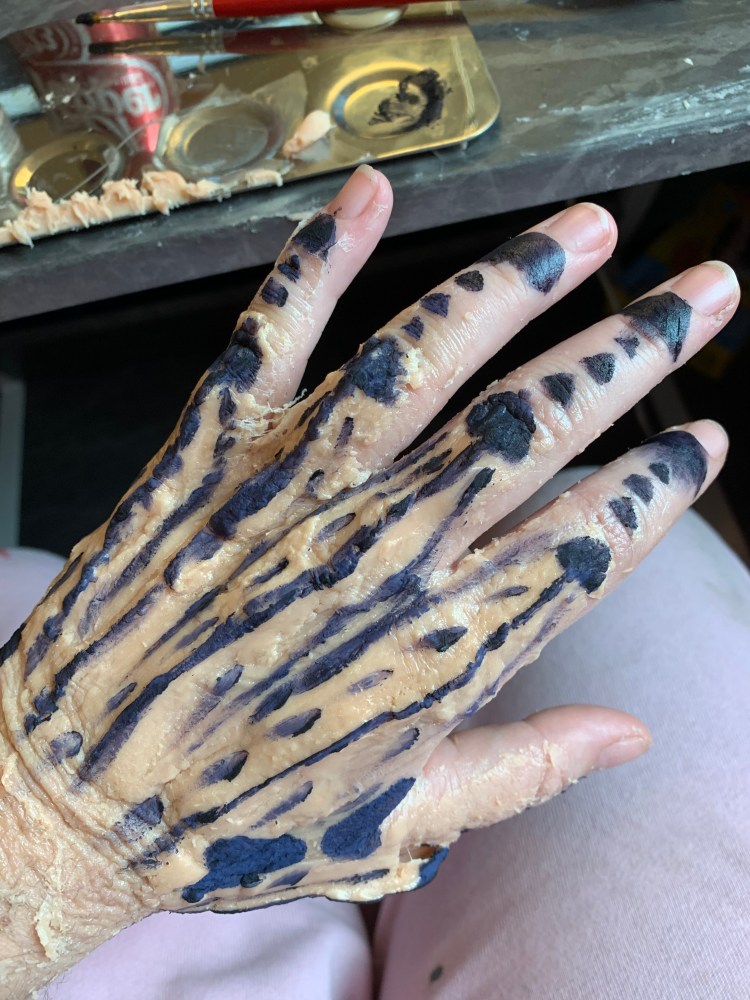
I began with the Midnight Sky color from my Mehron Bruise Wheel and laid down the initial shapes I wanted for the scales. The interesting thing about Mystique’s pattern is the darkest color is at the highest point of the scales rather than in the creases, so I dragged the this dark blue over the tops of each ridge, and where some of the smaller dark linear scales between the tendons. Next, I picked up the True Blue from my cream palette and applied the color over the hand, blending it with the dark blue as I went. This was great for the scales on the fingers, but ended up making the hand overall darker than I wanted, so I came back in with some teal highlights in the ridges where Mystique’s skin color is lighter.

I blended this in with a clean brush, but kept some hard lines around the bigger scales to give them some dimension.
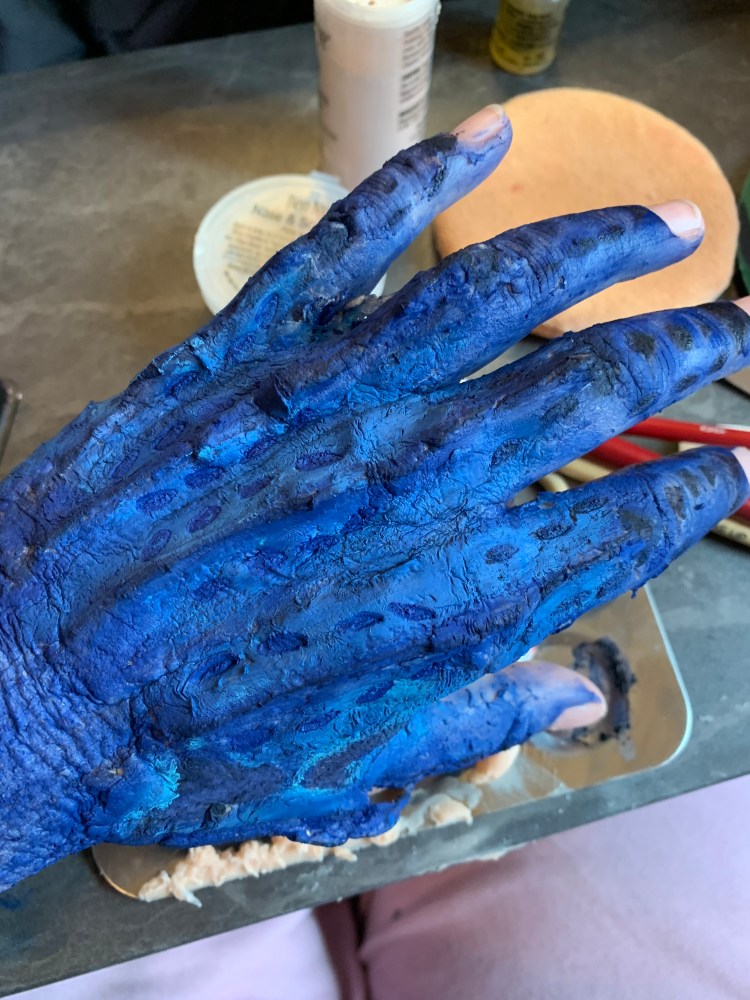
After my highlights were blended in, I came back to add more texture details, representing her smaller dot-like scales. At this point, I realized I created Night Crawler instead of Mystique, it’s fine. I needed to have made the blue a little lighter, I think that would have helped. The final touch was adding the nails.


This application took me about an hour and a half. Most of that time was spent making a mess with the scar wax, then things picked up once I started painting. By the time I got to painting, the latex had begun to lift in some places, and I even tried gluing bits of the prosthetic down. This is not a long-lived look that allows for movement, but works for a fun picture.

As I was taking pictures and enjoying my “dragon hand,” the prosthetic started to crack. I wonder if this could have been prevented had I done a few more coats of latex, but the position of the wax over the knuckles did not help.
 Regan Shaw Design